
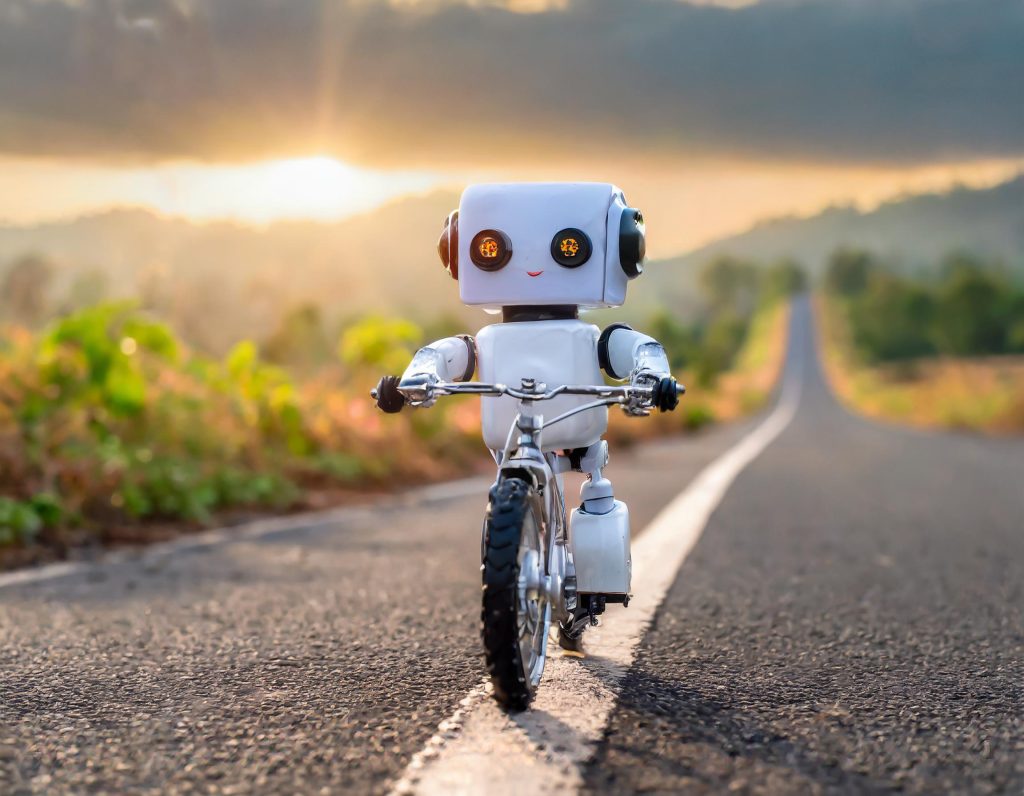
Beep beep! Get In
Throughout my legal practice I came across many situations where clients’ lives were extremely impacted by their revoked access to a driver’s license.
Mobility and access to resources are the result of a complex intersection of rights and facts and factors.
I have personally experienced a 15 minute drive requiring 2+ hours of public transportation. But I have also seen 20 minute public transport commutes requiring 40+ minutes by car (not including the incalculable time and rage in finding suitable parking).
It really is no wonder that for many of those clients, losing their license also meant losing their job (despite the job having nothing to do with driving a motor vehicle). The societal house of cards we live in leaves many of us vulnerable to a single significant disruption bringing it all down.
Anecdotally, I have noticed that people tend to lump “driving” as falling under one of two categories:
1. Completely quotidian, pedestrian even (if you’ll mind the pun)
2. An unjustifiably dangerous act that those maniacs in category 1 seem to not take seriously.
Driving Forces
Right from the start it is essential to be on the same page about this: there is a very low threshold to qualify as the kind of “heavy machinery” that I would worry about.
A personal car is certainly heavy machinery but so is a motorized scooter and a bicycle going downhill raises the same category of concerns.
I have often heard “you have brakes, pedestrians do not” as the justification for the heightened scrutiny on drivers.
The risk involved in operating a motorized vehicle is high and the frequency of opportunities for disaster is extremely high. No matter how low the chance, if you try enough times per day you will have unacceptable sheer numbers of victims. Even if the ratio is very low.
Every intersection, every stop light, every parking lot, every residential neighborhood is a moment deserving of complete attentiveness and awareness for the vulnerable pedestrians as well as other vehicles.
A Gradient of Fear
Look at the traffic laws that apply to your jurisdiction. There is an overwhelming probability that there is some correlation between the damage disparity and the penal consequences.
Pedestrians hit by nimble but heavy sedans cause outrage in a way that two slow vehicles trading paint in a parking lot simply does not.
Let’s see if this tracks with everyone’s intuition in terms of the hierarchy of responsibility in descending order:
0. Police Vehicles Utilized in the Course of Duty
1. Batmobile/Vehicles Operated in the Commission of a Criminal Offence
2. Extremely Heavy Transport Vehicles
3. Sports Cars
4. Individual/Family use vehicles
5. Motorized Single-Person Vehicles (Bikes, scooters)
6. Unicycle
7. Brisk Walkers Not Looking Where They’re Going
8. Sweet Old Lady Carrying a Basket of Cookies
Do you agree? Do you feel some tension in the order #2-3-4?
Perhaps you see #0 as being the top of the responsibility hierarchy or exempt from it.
But for the most part, our intuition and most laws track the idea that the more damage one is capable of, the higher their duty of care.
Privilege vs Luxury
Making essentials accessible without driving means driving can truly arguably become a luxury afforded to those who prove themselves competent and worthy of the privilege.
It is far more cruel to lock access to social mobility and financial stability behind a privilege.
This does not erase the objective risks involved in operation of a motor vehicle. There is a clear tension between how low the bar needs to be in order for people to meaningfully participate in the economy, and how high the threshold needs to be in order to appropriately reflect the fatal nature of the modern motorized vehicle.
I have joked (but secretly hoped) that lobbies such as mothers against drunk driving (MADD) should push legislatures towards fundamentally implementing self-driving car infrastructure and mandating their use. In a scenario where the boundaries that drivers must respect (signs, posts, painted lines) are all equipped with signifiers to be picked up by self-driving vehicles such that even in a complete snow storm (or dust storm if you live where the sun favors you) a self-driving vehicle will operate safely and ensure safety for those whose motor is entirely organic and whose max speeds often correlate with their need to reach a bathroom.
So then are autonomous drivers the future solution? Clearly the first consideration is environmental, but if that is resolved…
Autonomous driving is a topic intersecting multiple sore spots for modern humans: responsibility in the face of extreme danger (heavy machinery), public infrastructure, private for-profit companies (PLEASE see the Ford Pinto Memo case), and culture itself.
The cost of implementing the rollover portion of the amended Standard has been calculated to be almost three times the expected benefit, even using very favorable benefit assumptions.
“Fatalities Associated with Crash Induced Fuel Leakage and Fires” AKA Ford Pinto Memo
Perhaps clean green publicly funded free to use self driving safety bubbles can be a solution, but how would we even begin to work towards that future in the world we live in now?
As it stands self-driving vehicles are just that, modern motor vehicles which drive themselves. It is a solution to a single part of the multifaceted situation with no real regard to the overall equilibrium within (of) society.
Is this a quantitative problem that the correct numbers will solve? If it is proven beyond a reasonable doubt that AI drivers are safer than human ones, will the law of vehicular responsibility both criminal and civil be able to handle that shift? Will we penalize organic drivers with harsher penalties and higher insurance premiums?
Organic Engines and Public Utility
I would be remiss if I did not give due consideration to the major elephants in the room: busses and bicycles.
It is often joked that tech people will take 100 extra steps in order to simply reinvent the bus, and many proponents of the abolition of cars cite bicycles as the alternative.
I have to respect where the argument comes from but I am keenly aware of how easy it is to make me a proponent of the dirtiest diesel gas guzzler with a simple downpour. Einstein said time is relative and I think he meant waiting 37 minutes at a bus stop in subzero temperatures is precisely equivalent to waiting 6 hours.
This relates back to the Luxury-Danger Continuum I have been describing: frequent and extensive bus/train networks really do make driving seem superfluous and luxurious. But for most people that is not the reality, relying on public transportation not only feels like a cruel punishment, it materially impacts the value/time considerations of working people who must add commute times onto their work days or try to squeeze some semblance of self-actualization on public transport. An additional 4 hours to a work day spent transferring between busses is cruel and actively affects social mobility. This goes beyond luxury and cost saving, and moves into “injustice” territory.
In a perfect world (or cities with perfect weather) I can really see bicycles taking on a more prominent role in transportation but they come with their own challenges. Cyclers love cycling. By many wheelchair-bound people are unable to ride bicycles whereas there are motor vehicle options. Cycling involves cardiovascular minimum requirements as well as purely muscular. For some asthmatics that can be a serious hindrance, especially if we build policy around the “luxuriousness” of motor vehicles.
Recalling our initial problem: there are those whose entire lives collapse because they can no longer access the bare essentials due to losing access to their driver’s license. The problem is not the responsibility or lack thereof, it is about being able to meaningfully access things like healthcare and work and groceries and community and beauty.
Enhancing public transport may be the way to go but that requires a serious investment that has proven slow and difficult to achieve, and when done correctly, still does not escape criticism and scrutiny. Public transport scrapes against people’s every day and that will make certain parts of their lives ache raw. Adding physiological requirements beyond those required for operating a motor vehicle does not seem to me to address the justice issue at stake either.
Teleportation
One factor to consider is eliminating spatial limitations altogether and teleporting instantly to where we need to be. My teleporter’s in the shop, so for now I will have to make use of the next best alternative: teleportation through virtual spaces.
Sci-fi aside, in 2021 the number of commuters dropped drastically as work-from-home measures were adopted.
It was a tough time for the economy but not as ruinous as some warned.
There is an undeniable je-ne-sais-quoi about the spiritual nature of inhaling the same fumes as your fellow drivers stuck in traffic. But in the interest of justice I would be willing to relegate that portion of my life to luxury and personal time, rather than a mandatory requirement in order to participate in the economy.
We see this with the power that online shopping has over the humble shopping mall. Children of today do not know of the mall as a place you visit in order to see which of your friends are currently there, without any prior planning. Arcades have evolved with the times to involve multisensory experiences such as VR and motion-based games. But for many, the experience of playing games with friends simply requires turning on your PC or Console.
As we slowly phase out the need for vehicular transportation, we must ask: who is being left on the sidewalk?
On the Luxury-Danger Continuum, where do you think we are now? Where do you think we ought to be? Are we policing driving at a luxury level, or on a necessity level? and What risks can we accept?
ABOUT THE AUTHOR
Nawar Kamel is CEO and Co-Founder of Experto AI Inc., and licensed Canadian lawyer in Ottawa, ON, Canada.
Nawar started his academic path studying philosophy and went on to get his masters in philosophy focusing on social contract theory from York University. Nawar graduated from the University of Ottawa Faculty of Common Law and was a litigator spending his days fighting in the courts on behalf of his clients until he went on to found Experto AI Inc., which was established to create AI tools geared towards lawyers and legal researchers.